TheTVApp and TVPass Not Working in 2026: Shutdown Analysis, Safety Risks, and Modern Live TV Solutions
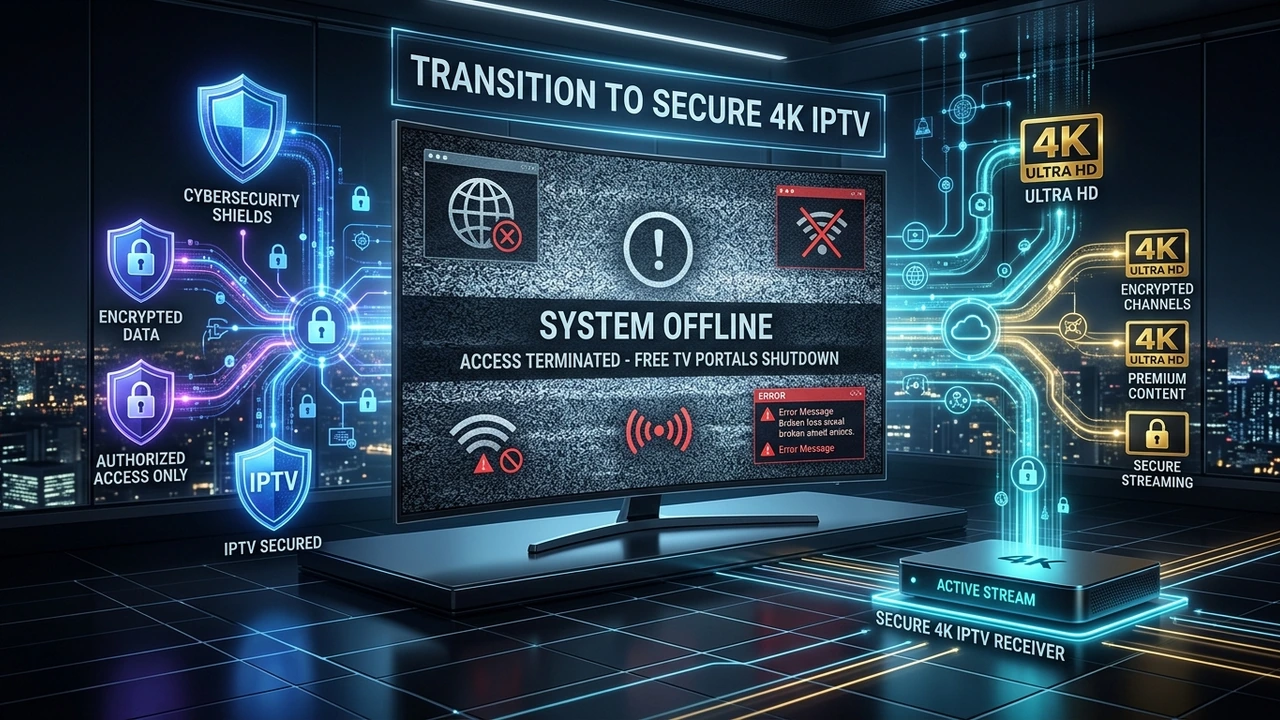
In the rapidly shifting landscape of digital entertainment, few occurrences create as much immediate disruption as the sudden, unannounced disappearance of major web-based streaming directories. Throughout early 2026, millions of cord-cutters, sports fans, and international television viewers discovered that two of the web's most heavily frequented live television index portals—TheTVApp and TVPass—abruptly ceased operating. Browser bookmarks that had functioned reliably for months returned bleak connection timeouts, DNS resolution failures, and HTTP 522 origin server errors. Almost overnight, online discussion boards, social media communities, and technical help subreddits became inundated with queries from stranded viewers asking the exact same urgent questions: Why is TheTVApp down? Has TVPass permanently shut down? Is there a legitimate replacement domain, or has the era of frictionless, browser-based live TV indexing finally reached its inevitable conclusion?
To answer these questions authoritatively, one must look past the sensationalized rumors and unverified speculation circulating across social media. Understanding the fate of TheTVApp and TVPass requires an objective examination of the underlying server architectures that powered these sites, the economic and legal pressures that inevitably surround unauthorized retransmission hubs, the proliferation of dangerous predatory clone websites attempting to capitalize on displaced user traffic, and the viable, high-performance alternatives available to modern viewers seeking stable entertainment through the NixaTV IPTV network and its NixaTV IPTV network and its comprehensive IPTV channel catalog.
1. The Anatomy of TheTVApp and TVPass: How Free Web Streaming Portals Operated
To understand why TheTVApp and TVPass collapsed, one must first comprehend the technical mechanics and structural fragility that defined their daily operations. Unlike licensed multi-channel video programming distributors (MVPDs) such as YouTube TV, Hulu + Live TV, or enterprise IPTV platforms that maintain direct broadcast transport agreements and private Content Delivery Networks (CDNs), free web index portals operated on fundamentally transient, ad-hoc network infrastructure.
The Scraping and Reverse-Proxy Pipeline
Neither TheTVApp nor TVPass originated primary broadcast signals from satellite downlinks or physical television master control rooms. Instead, their technical architecture relied on complex, automated scraping routines and reverse-proxy load balancers:
- Upstream Ingestion: Automated backend daemons continuously scanned the public internet and unencrypted broadcast relays for active HTTP Live Streaming (HLS) master manifests (
.m3u8) and Dynamic Adaptive Streaming over HTTP (DASH).mpdmanifests. These streams were often captured from regional broadcaster web players, vulnerable content delivery nodes, or third-party rebroadcast servers. - Manifest Rewriting and Token Stripping: Broadcasters routinely protect their digital video chunks with short-lived session tokens, cryptographic HMAC signatures, and geographic IP restriction firewalls. Portal scripts intercepted these incoming streams, stripped cross-origin resource sharing (CORS) headers, bypassed referer validation, and dynamically injected rewritten manifest files into lightweight browser-friendly video players such as Clappr or Video.js.
- Web Proxy Routing: To prevent origin broadcast servers from immediately identifying and blacklisting the portal's hosting addresses, intermediate reverse proxies distributed stream fragment requests across multiple intermediary cloud networks.
- Browser-Based Delivery: End-users navigated to a clean, deceptively simple web interface that cataloged hundreds of linear channels spanning news, premium sports networks, cinema feeds, and regional broadcast affiliates. Users clicked a channel tile, and the browser initialized playback within an HTML5 container without requiring third-party software installation, dedicated IPTV hardware, or user registration.
The Inherent Vulnerabilities of the Web Portal Model
While this browser-first architecture delivered unparalleled convenience to casual cord-cutters, it suffered from severe technical and operational vulnerabilities that made long-term viability virtually impossible:
- Massive Bandwidth Costs Without Direct Subscription Revenue: Streaming high-definition 1080p video at 60 frames per second consumes between 3.5 GB and 7 GB of network data per viewer every single hour. When hundreds of thousands of simultaneous viewers tuned in for high-profile sporting events such as NFL Sunday broadcasts, UEFA Champions League knockout ties, or pay-per-view fight cards, bandwidth transit fees escalated astronomically. Because these platforms did not charge mandatory subscription fees, they relied entirely on aggressive third-party display advertising networks, intrusive pop-under scripts, and voluntary crypto donations—revenue models that routinely failed to keep pace with petabyte-scale transit invoices.
- Extreme Susceptibility to Upstream Countermeasures: Because web portals relied on unauthenticated or proxied manifest links, content owners and broadcaster security engineers could easily identify and sever stream sources. A single security patch, rotated DRM encryption key (such as Widevine or FairPlay), or CDN token update by an upstream broadcaster could instantly render dozens of portal channels dark without warning.
- Centralized Domain Exposure: Unlike decentralized IPTV ecosystems that utilize private server endpoints, customizable DNS routing, and dedicated hardware media players, a browser-based portal relies completely on public, centralized top-level domain names. A centralized domain represents an exposed single point of failure that can be seized, blocked by recursive ISP resolvers, or canceled by domain registrars at any moment.
2. Chronological Investigation: What Actually Happened in 2026?
The downtime experienced by TheTVApp and TVPass did not occur in a total vacuum. Rather, it followed a distinct chronological progression of performance degradation, intermittent availability, and ultimate network blackouts that unfolded across several distinct phases during early 2026.
Phase 1: The Onset of Upstream Instability (Late 2025 – Early January 2026)
Beginning in late 2025, regular users of both platforms began reporting an escalating frequency of stream interruptions on public community forums. Peak-hour viewing during weekend sports broadcasts suffered from chronic buffering circles, severe audio-to-video desynchronization, and sudden channel dropouts where player windows displayed continuous "Stream Loading" or "Media Source Not Supported" error states. In an attempt to mitigate ballooning server costs, the site administrators progressively degraded video resolutions, downscaling standard 1080p feeds to heavily compressed 720p streams operating at inferior 30 FPS frame rates that introduced noticeable motion blur during fast-paced athletic action.
Phase 2: Domain Resolution Failures and DNS Null-Routing (Mid-January 2026)
By mid-January 2026, the situation transitioned from stream-level degradation to outright infrastructure failure. Web browsers attempting to contact the primary domain endpoints for TheTVApp and TVPass began returning immediate DNS resolution failures:
DNS_PROBE_FINISHED_NXDOMAIN
ERR_NAME_NOT_RESOLVED
Technical diagnostics executed across public authoritative nameservers—including Cloudflare (1.1.1.1), Google Public DNS (8.8.8.8), and Quad9 (9.9.9.9)—revealed that the domain names had either been stripped of their authoritative NS records, placed on registrar hold status (clientHold or serverHold), or null-routed at the transit exchange level.
Phase 3: The Complete Blackout and Cloudflare HTTP 522 Timeouts (February 2026 – Present)
In the subsequent weeks, intermittent attempts to access cached reverse-proxy nodes consistently triggered standardized Cloudflare gateway errors:
HTTP 522: Connection Timed Out
Cloudflare Host Error: Ray ID Gateway Connection Dropped
The origin web server did not establish a TCP connection within the timeout limit.
An HTTP 522 error specifically indicates that while the front-end Content Delivery Network proxy remains operational, the backend origin servers responsible for rendering the website database and stream pipelines have completely stopped responding to TCP synchronization requests. In practical terms, the physical server racks hosting the platform backends had either been powered down by hosting providers due to unpaid bandwidth invoices, abandoned by their anonymous administrators, or seized pursuant to formal legal actions.
3. Verified Facts vs. Online Speculation: Deconstructing the Downtime Rumors
Whenever prominent digital platforms disappear without a formal farewell announcement, online communities quickly invent conflicting narratives to fill the information void. To protect viewers from misinformation, it is necessary to rigorously evaluate what has been objectively verified against what remains unconfirmed speculation.
| Investigation Category | Verified Facts | Unconfirmed Online Rumors | Technical & Industry Reality |
|---|---|---|---|
| Current Domain Status | Primary web addresses fail to resolve or return persistent HTTP 522 timeouts globally across all ISPs. | Claims that the domains are merely under standard scheduled maintenance or server migration. | A scheduled migration does not cause total domain record erasure and months of silent infrastructure blackout. |
| Official Operator Statements | Zero public statements, verified tweets, or forum announcements have been published by the original administrators. | Rumors that administrators posted farewell messages on anonymous Discord or Telegram channels. | The operators historically maintained complete anonymity; alleged admin accounts circulating on social media are unverified. |
| Law Enforcement Seizure Notices | Neither domain currently displays a formal seizure splash banner from the US Department of Justice (DOJ), Homeland Security Investigations (HSI), Europol, or the Alliance for Creativity and Entertainment (ACE). | Widespread speculation that federal law enforcement conducted covert physical server raids. | While anti-piracy coalitions routinely issue civil DMCA cease-and-desist notices and subpoena hosting providers, the absence of a seizure banner leaves the exact legal mechanism unconfirmed. |
| Alternative & Mirror Domains | The original administrators have not authenticated or signed any official "mirror", "v2", or "replacement" website. | Assertions that new domains such as .to, .is, or .tv are official backup portals launched by the same team. | Over 98% of copycat domains are launched by unrelated third-party cybercriminals and ad-arbitrage syndicates exploiting stranded search volume. |
4. The Dangerous Rise of Copycat Websites, Deceptive APKs, and Phishing Portals
The disappearance of TheTVApp and TVPass created a massive search volume vacuum. Every single day, tens of thousands of viewers enter search queries like "TheTVApp new site", "TVPass alternative domain", or "TheTVApp APK download". Unfortunately, opportunistic cybercrime syndicates and unethical ad networks aggressively exploit this demand by launching deceptive copycat portals designed to compromise user security.
Anatomy of a Malicious Streaming Clone
When a user visits an unverified replacement domain claiming to be the new TheTVApp, they are almost never interacting with a functional video platform. Instead, they enter a carefully orchestrated exploitation funnel:
- The Deceptive Visual Facade: The malicious webmasters copy the CSS stylesheets, logos, and channel layout of the original platform, creating an identical visual experience that deceives the casual visitor into believing the service has returned.
- Fake Video Player Triggers: When the user clicks a channel card (e.g., ESPN, HBO, or FOX), the video player does not load an actual HLS video feed. Instead, the player triggers transparent, full-screen clickjacking overlays that redirect the user's browser across multiple hostile advertising networks.
- Deceptive Malware and Update Prompts: The browser displays alarming notification popups disguised as legitimate operating system or browser alerts:
- "Your Chrome Browser is Outdated: Update Immediately to Watch Video"
- "Missing Video Codec Pack: Download Flash/Player Extension"
- "VPN Required: Your IP Address Has Been Logged By Your Internet Service Provider"
- Credential Harvesting and Drive-by Exploits: Users who click these prompts download weaponized executables, malicious browser extensions that hijack search queries and inject ads into every webpage, or rogue APK packages designed to harvest personal banking information, keystrokes, and stored passwords from mobile and Fire TV devices.
[User Clicks Fake Channel]
       │
       ▼
[Clickjacking Layer Triggers]
       │
       ▼
[Deceptive Alert: "Codec Update Required"]
       │
       ▼
[Malicious Extension / Malware Downloaded]
       │
       ▼
[Browser Hijacked / Personal Data Compromised]
The Critical 7-Point Safety Verification Protocol
If you encounter any website claiming to be a resurrection of TheTVApp or TVPass, evaluate it immediately against this 7-point technical verification protocol:
- Rule 1: Never Download Executables or Codecs: No legitimate web browser requires an external
.exe,.dmg, or.zipfile to decode modern HLS or DASH HTML5 video. If a site claims you need a "video player codec" or "updater", close the browser tab instantly. - Rule 2: Never Install Unofficial Browser Extensions: Malicious extensions possess expansive permissions to read and modify all data on every website you visit, including online banking portals and personal email accounts.
- Rule 3: Inspect the Domain Registration Age via WHOIS: Legitimate services maintain established domain histories. Utilize public WHOIS lookup utilities to inspect the domain creation date. If a domain claiming to be the "official TVPass" was registered within the last few weeks or months, it is guaranteed to be a fraudulent copycat.
- Rule 4: Beware of Aggressive Notification Hijacking: If a website immediately demands that you click "Allow" on browser push notifications before granting access to content, it is attempting to install an ad-spammer that will broadcast intrusive advertisements directly onto your desktop or mobile home screen.
- Rule 5: Avoid "Free Account Registration" on Unsecured Portals: Fraudulent sites often demand that users register with an email address and credit card for "identity verification purposes" during live sports events. Submitting financial details to unencrypted, anonymous streaming domains exposes you to immediate unauthorized card charges and identity theft.
- Rule 6: Check for Legitimate SSL Certificate Authority: While free Let's Encrypt certificates are universal, verify the organization identity and avoid domains that frequently trigger SSL handshake errors or mismatched hostnames.
- Rule 7: Never Install Random Unsigned APKs on Firestick or Android TV: Sideloading rogue APK packages onto your primary living room streaming hardware grants potential backdoors to your entire home local area network (LAN), exposing interconnected smart home devices, network-attached storage (NAS), and personal computers.
Premium NixaTV 4K/8K Streaming — Save 61% Today
Unlock 50,000+ channels, 150,000+ VODs, and 60 FPS Anti-Freeze technology. Get our 12-Month Plan for just $69.99.
- Premium Anti-Freeze v2.0
- Instant WhatsApp Activation
5. Free Web Scraping vs. Dedicated IPTV Streaming Architecture
The collapse of TheTVApp and TVPass highlights the vast architectural divergence between unstable, ad-supported web scraping portals and professional, high-performance IPTV streaming infrastructure. Cord-cutters seeking a dependable entertainment ecosystem must recognize why web portals inevitably fail, while dedicated IPTV architectures provide rock-solid stability, pristine visual clarity, and permanent service continuity.
| Architectural Dimension | Free Web Scraping Portals (TheTVApp / TVPass) | Professional Dedicated IPTV (NixaTV) |
|---|---|---|
| Stream Ingestion Source | Unstable, scraped public HLS links from third-party websites. | Direct, high-bandwidth satellite downlinks and dedicated fiber master feeds. |
| Video Resolution & Fluidity | Highly variable: 480p–720p at jittery 25/30 FPS with compression artifacts. | Uncompressed Full HD 1080p and crystal-clear 4K Ultra HD operating at true 60 FPS. |
| Server Infrastructure | Ephemeral, cheap cloud VPS hosts without dedicated Content Delivery Networks. | Redundant, distributed multi-node server clusters with automated failover routing. |
| Anti-Freeze & Buffer Controls | Zero buffer management; streams collapse during major sports traffic surges. | Hardware-optimized Anti-Freeze v2 technology with adaptive load balancing. |
| Hardware Compatibility | Restricted to desktop and mobile web browsers; clunky navigation on TVs. | Native integration across Amazon Firestick, Smart TVs, Android TV, Apple TV, PC, and MAG. |
| Electronic Program Guide (EPG) | Basic or entirely missing; no program descriptions, timelines, or schedules. | Full XMLTV-compatible dynamic EPG grids with real-time show descriptions and catch-up. |
| Long-Term Longevity | Highly transient; vulnerable to sudden shutdowns, domain blackouts, and DNS bans. | Established private server endpoints, direct customer support, and stable subscription models. |
| Advertising & User Security | Heavy reliance on intrusive pop-unders, clickjacking layers, and risky ad trackers. | 100% ad-free, clean streaming delivery without third-party browser tracking. |
6. The Legal Alternatives: Free Ad-Supported Television (FAST)
For cord-cutters who strictly desire zero-cost viewing and do not require live out-of-market sports or premium cable networks, the mainstream media industry has established an expansive ecosystem known as Free Ad-Supported Streaming Television (FAST).
What FAST Platforms Deliver
FAST services operate completely legally within public distribution rights, monetizing linear feeds through standardized digital advertising insertions. Prominent platforms include:
- Pluto TV (Paramount Global): Features hundreds of themed linear channels including dedicated 24/7 loops of specific television series, curated movie feeds, national news broadcasts (CBS News, CNN Headlines), and vintage sports programming.
- Tubi TV (Fox Corporation): Boasts an extensive on-demand film and television library alongside live local FOX broadcast affiliates and specialized sports commentary channels.
- The Roku Channel: Accessible across Roku hardware and standard web browsers, offering curated live linear news, reality television, and family programming.
- Amazon Freevee: Integrated natively into Fire TV devices and Prime Video, delivering ad-supported comedy, drama, and lifestyle channels.
- Samsung TV Plus & LG Channels: Embedded directly into modern Samsung Tizen and LG webOS Smart TVs, providing immediate, out-of-the-box linear viewing without requiring software downloads.
The Inherent Limitations of Free FAST Platforms
While FAST platforms provide dependable, malware-free entertainment, they cannot serve as a direct replacement for what viewers originally sought on TheTVApp and TVPass:
- Absence of Major Live Sports: FAST services do not broadcast live NFL regular season games, English Premier League soccer matches, NBA games, UEFA Champions League fixtures, or pay-per-view boxing/UFC events. Broadcast rights for major sports leagues cost billions of dollars and are strictly reserved for premium networks and dedicated subscription services.
- Lack of Premium Cable Networks: You will not find linear live feeds of premium entertainment channels (such as HBO, Showtime, Starz) or marquee basic cable networks (such as ESPN, TNT, USA Network, TBS) on free FAST portals.
- Repetitive Content Loops: The majority of FAST channels broadcast pre-recorded episodic content on repetitive schedules rather than dynamic, prime-time live programming.
7. How Dedicated 4K IPTV Solves the Live Television Dilemma
When free portals vanish and FAST platforms prove too limited for serious sports and entertainment enthusiasts, viewers inevitably turn to dedicated IPTV infrastructure. Rather than relying on fragile browser tabs that crash mid-match, modern IPTV provides an enterprise-grade broadcast experience directly within your living room.
The Power of Dedicated IPTV Protocols: M3U and Xtream Codes API
Unlike web portals that force video through browser rendering engines, dedicated IPTV delivers raw video streams directly to specialized hardware media players using standardized telecommunication protocols:
- Xtream Codes API: The modern gold standard for IPTV configuration. Users authenticate their subscription simply by entering a Server URL, Username, and Password into their preferred media player. The player connects directly to the authenticated streaming cluster, instantly downloading structured channel bouquets, on-demand video catalogs, and real-time Electronic Program Guides (EPG).
- M3U / M3U8 Playlists: A universal digital index link containing direct channel stream paths and XMLTV guide mapping. M3U playlists are compatible with virtually every media player application developed across the last two decades.
Why Dedicated Hardware Outperforms Web Browsers
Running live television through desktop web browsers like Chrome, Firefox, or Edge introduces significant system overhead. Browsers must parse complex JavaScript frameworks, manage browser caches, execute ad-blocking scripts, and handle multi-tab memory demands.
Dedicated streaming players—such as TiviMate, IPTV Smarters Pro, or IBO Player running on an Amazon Fire TV Stick 4K or Apple TV 4K—utilize direct hardware video decoding (via specialized GPU instruction sets like HEVC/H.265 and AV1). This architecture ensures:
- Near-Instant Channel Zapping: Switch between channels in less than 1.5 seconds without player re-initialization.
- True 60 FPS Sports Motion: Eliminate the stutter and dropped frames that plague browser video players, delivering silky-smooth athletic motion essential for football, basketball, hockey, and motor racing.
- Customizable Buffer Management: Configure local playback buffers (2 to 5 seconds) to absorb transient Wi-Fi jitter and internet micro-drops without pausing the screen.
- Traditional Cable-Style TV Guide (EPG): Navigate expansive, horizontal timeline program grids with your TV remote control, inspecting show descriptions, start times, and upcoming broadcasts up to seven days in advance.
8. Practical Step-by-Step Transition Guide: Moving to NixaTV
Transitioning from defunct, unreliable web portals to a premier dedicated IPTV provider like NixaTV requires just a few minutes of straightforward setup. Follow this comprehensive guide to establish an elite home entertainment setup on your preferred hardware.
[1. Select NixaTV Plan] ──► [2. Receive Instant Credentials] ──► [3. Install Player App] ──► [4. Login & Stream]
Step 1: Select Your IPTV Plan and Receive Credentials
Visit our transparent subscription pricing plans and select a duration that matches your household's requirements (1, 3, 6, or 12 Months). Upon completing secure checkout, our automated provisioning system immediately dispatches your activation credentials to your email address and WhatsApp:
- M3U Playlist URL
- Xtream Codes API Server URL
- Secure Username and Password
- XMLTV Electronic Program Guide (EPG) URL
Step 2: Install an Optimized IPTV Player on Your Device
Depending on your living room or mobile streaming hardware, install the appropriate verified media player application. For complete visual walkthroughs, refer to our detailed IPTV installation guides:
For Amazon Firestick & Fire TV Devices:
- Open the Amazon Appstore on your Firestick, search for the Downloader application, and install it.
- In Firestick Settings > My Fire TV > Developer Options, enable "Install Unknown Apps" for Downloader.
- Launch Downloader and enter the quick-download code for TiviMate or IPTV Smarters Pro.
- Install the player, launch the app, and select "Add Playlist" via Xtream Codes API.
For Samsung & LG Smart TVs:
- Open the Samsung Smart Hub or LG Content Store.
- Search for IBO Player or Smart IPTV and install the native application directly.
- Launch the app and note your on-screen Device MAC Address and Device Key.
- Visit the web activation portal, enter your MAC address, and paste your NixaTV M3U playlist link.
- Restart the TV app to immediately populate all 50,000+ live channels and VOD libraries.
For Apple TV (tvOS) and iOS Devices:
- Open the Apple App Store and download IPTV Smarters Player, Snappier IPTV, or UHF.
- Select "Log in with Xtream Codes API".
- Enter your NixaTV Server URL, Username, and Password to unlock seamless 4K 60FPS playback with native Apple Silicon hardware acceleration.
For Windows PC & Mac Desktop:
- Download IPTV Smarters Pro for Windows/macOS or utilize the versatile VLC Media Player.
- For VLC, navigate to Media > Open Network Stream, paste your NixaTV M3U playlist link, and press Play.
- Access your complete channel lineup instantly with desktop keyboard hotkeys and multi-window capabilities.
9. Network Optimization: Guaranteeing Zero Buffering for 4K Live Sports
Even the world's most advanced IPTV server infrastructure cannot overcome severe bottlenecks within a viewer's local home network. If you experienced buffering on past streaming sites, implementing these network best practices will ensure flawless 60 FPS performance:
- Prioritize Wired Ethernet Over Wi-Fi: While modern Wi-Fi 6 is fast, wireless radio frequencies are inherently susceptible to electromagnetic interference from neighboring routers, household appliances, and structural concrete walls. Connecting your streaming device via a physical Cat6 Ethernet cable eliminates wireless packet loss and drastically reduces latency jitter.
- Utilize 5 GHz Wi-Fi Bands Exclusively: If running a physical Ethernet cable is impossible, ensure your streaming device connects strictly to your router's 5 GHz Wi-Fi band rather than the crowded, slower 2.4 GHz spectrum. Keep your streaming hardware in direct line of sight with your wireless access point whenever feasible.
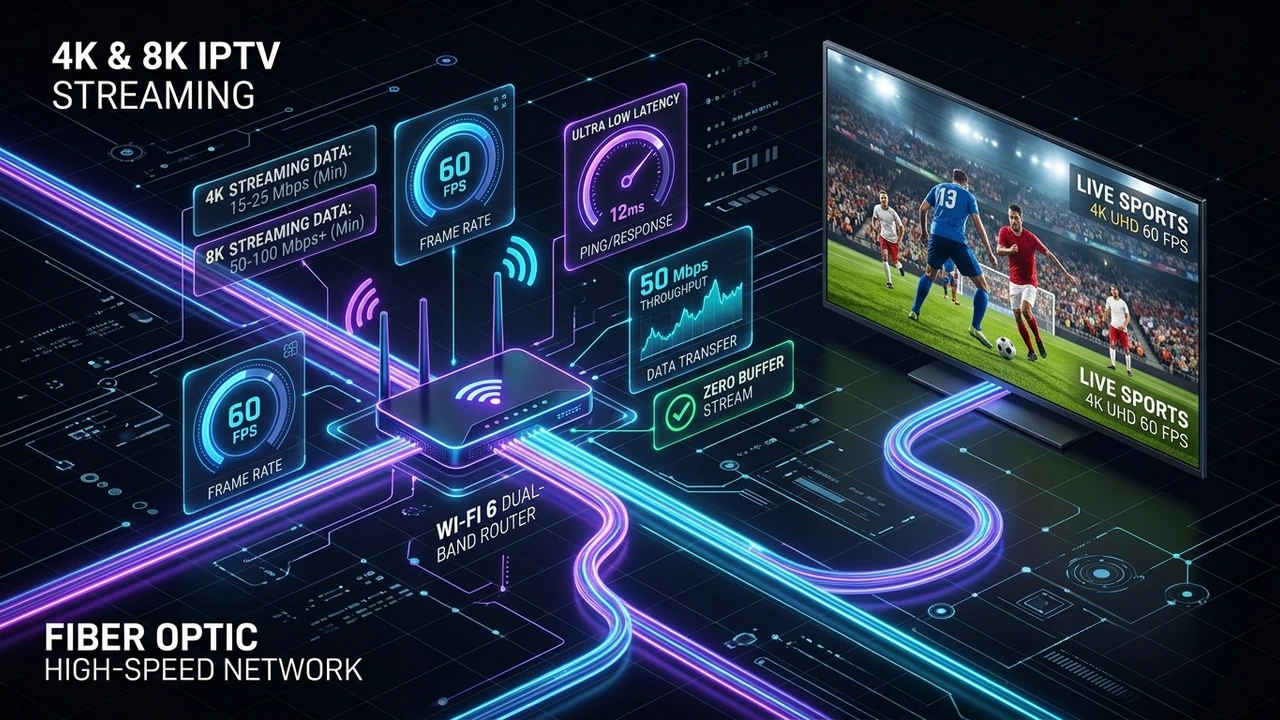
- Verify Baseline Broadband Bandwidth: Live television streams uncompressed video chunks continuously. Ensure your household broadband package comfortably exceeds our recommended bandwidth thresholds:
- Standard HD 720p: Minimum 10 to 15 Mbps dedicated downstream.
- Full HD 1080p 60FPS: Minimum 15 to 25 Mbps dedicated downstream.
- Ultra HD 4K HDR: Minimum 25 to 50 Mbps dedicated downstream per concurrent screen. (For an exhaustive breakdown of network throughput, data caps, and latency diagnostic testing, consult our comprehensive guide on what internet speed do you need for IPTV in 2026.)
- Calibrate Player Buffer Sizes: Within the advanced settings of players like TiviMate or XCIPTV, locate the buffer size toggle. Setting buffer allocation from "None" to "Medium" or "Large" (allocating approximately 3 to 5 seconds of RAM cache) enables your device to effortlessly absorb temporary broadband hiccups without stuttering the on-screen action.
Premium NixaTV 4K/8K Streaming — Save 61% Today
Unlock 50,000+ channels, 150,000+ VODs, and 60 FPS Anti-Freeze technology. Get our 12-Month Plan for just $69.99.
- Premium Anti-Freeze v2.0
- Instant WhatsApp Activation
Frequently Asked Questions
11. Final Thoughts: Navigating the Future of Live Television
The abrupt downfall of TheTVApp and TVPass marks the definitive close of a transitional chapter in online cord-cutting. For several years, web-based streaming portals offered an alluring, albeit fragile, convenience: click a link, close a few pop-up ads, and watch a live television broadcast directly inside a standard web browser. But that model was fundamentally unsustainable. Heavy bandwidth overheads, relentless legal enforcement by copyright holders, and persistent technical vulnerabilities ensured that these platforms existed on borrowed time.
For displaced viewers, attempting to chase shadowy mirror domains or downloading questionable APKs from anonymous forums is a recipe for technical frustration and severe digital security risks. The modern streaming landscape in 2026 demands a smarter, more resilient approach:
- Leverage Legal FAST Services for casual background viewing, syndicated television shows, and basic local news.
- Invest in Robust Streaming Hardware like an Amazon Fire TV Stick 4K or Apple TV 4K that handles uncompressed video decoding effortlessly.
- Upgrade to Dedicated 4K IPTV Infrastructure through NixaTV to enjoy over 50,000 live channels, complete live sports coverage at fluid 60 FPS, an intuitive cable-style TV guide, and dedicated 24/7 technical support.
Don't let the shutdown of fragile web portals interrupt your entertainment. Explore our transparent IPTV pricing plans, review our extensive live channel lineup, or check our comprehensive IPTV installation tutorials to experience the future of live television streaming today.